Insights > Article > Posted: 2023-Nov-16, Updated: 2026-Nov-16
Window Efficiency by Window Type – What Ottawa Homeowners Should Know Before Replacing

Window energy efficiency varies by window type, with differences in operating mechanisms, sealing systems, air leakage and thermal performance. Fixed windows typically offer excellent airtightness, while casement and awning windows generally provide better sealing than sliding and hung windows. This guide helps Ottawa homeowners compare the energy efficiency of different window styles, understand the factors that influence thermal performance and select replacement windows that reduce heat loss, lower energy costs and maximise year-round comfort.
When considering window types to maximise your home's energy efficiency, it's essential to understand how different designs can impact insulation, energy consumption, and overall comfort. Here's a comprehensive look at how various window types perform and what you need to know to make an informed decision.
Understanding window efficiency
Windows play a critical role in maintaining your home's comfort and energy efficiency. While advancements in technology contribute significantly, traditional design elements also offer substantial benefits. By exploring different window types, you can find those that best enhance insulation and reduce energy consumption.
Is there really a difference?
Yes, different window types exhibit varying levels of energy efficiency. Historically, some window types have been more efficient than others, but advancements in manufacturing have levelled the playing field. Here's a look at the efficiency rankings for vinyl windows, from most to least efficient:
Historically:
- Picture Windows
- Casement & Awning Windows
- Single & Double-hung Windows
- Single & Double-slider Windows
Today:
Manufacturers have made significant strides in equalising the energy efficiency of various window type. The efficiency largely depends on the specific brand and the technology used. However, non-operational picture windows remain consistently efficient due to their fixed nature.
Comparative analysis of window efficiency
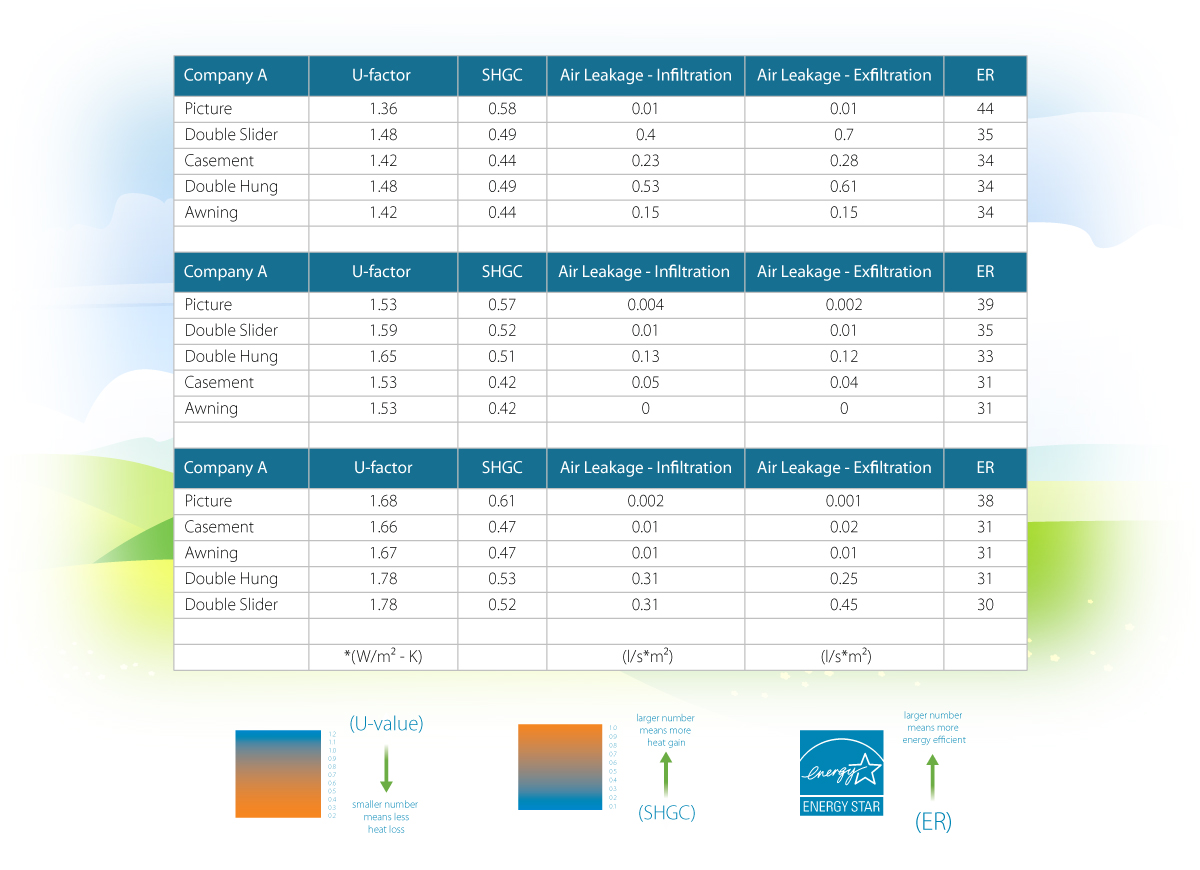
A comparison of three local Ottawa window installers (listed anonymously to avoid bias) reveals that different brands can affect the energy efficiency rankings of window styles. Using data from NRC Canada Windows, each company's standard line of vinyl, double-glazed, Argon-filled windows was analysed. The results showed that while each company's rankings varied, picture windows consistently performed best.
Results
As you can see, each company shows a different order for the best ER-performing window style - picture windows being the exception.
Making windows equally efficient through technology
Energy efficiency in windows is calculated based on several factors, including heat gain, heat loss, and insulation. Manufacturers can enhance these factors through technical adjustments, such as:
- Glazing: Using multiple layers of glass to improve insulation.
- Coatings: Applying low-emissivity (Low-E) coatings to reduce heat transfer.
- Gas Fills: Filling the space between panes with gases like Argon or Krypton to improve insulation.
For example, to improve the efficiency of sliders and hung windows, manufacturers may offer upgrades like replacing Argon with Krypton gas between the panes, which provides better insulation.
Key takeaways
- Picture Windows: Always a top performer due to their non-operational nature, offering maximum insulation.
- Casement, Awning, and Hopper Windows: Efficient designs that provide good insulation and ventilation.
- Single and Double-Hung Windows: Traditionally less efficient but can be upgraded with better glazing and gas fills.
- Single and Double-Slider Windows: Similar to hung windows in efficiency but can also benefit from technical upgrades.
Summary
Choosing the right window type can make a significant difference in your home's energy consumption and year-round comfort. Bayview Windows can help you compare window styles and performance ratings to find the right balance of energy efficiency, functionality and affordability.
Related articles


Maximise energy efficiency with the right window style
Request your free, no-obligation quote today and discover how energy-efficient replacement windows can help reduce heating and cooling costs while enhancing your home's comfort and long-term value.

Categories:

Category Posts:
per window/door opening
for Windows and Doors
Humidity/Temp. Guidelines
