1. In the showroom & quoting phase
The biggest headaches in the selection and buying process often start at the kitchen table before the work even begins.

a. The “Sign Today Only” High-Pressure Discount
If a sales rep claims a massive discount disappears the moment they walk out the door, show them the way out. Solid, reputable companies guarantee their written quotes for at least 30 days so you can compare competitive proposals without pressure.
b. The Hidden Cost of Piece-Rate Subcontracting
Many window and door retailers operate solely as sales agencies, handing off installations to lowest-bidding independent crews paid flat "per-door" rates. This model incentivises speed over precision, often leading to missed flashing, poor insulation, and finger-pointing when a draft or leak develops months later. Worse, many retailers write clauses into trade contracts shifting all installation issues to the subcontractor's warranty, leaving you stranded if that crew leaves or refuses to return.
The real difference comes down to accountability and how installers are compensated. Whether a company uses dedicated in-house craftsmen or trusted (product-line trained specialist) trade partners, installers should never be rushed by piece-rate pay. Paid hourly, they have the time required to properly plumb, insulate, and seal every opening to endure harsh winters.
BEFORE SIGNING A DEAL, ASK:
- Are crews paid hourly or per door? Hourly compensation ensures crews focus on quality craftsmanship rather than rushing to the next job.
- Are all workers fully insured and covered under provincial safety boards (such as WSIB)? This protects you from personal liability on your property.
- Does the company stand behind the work with a single, direct labour warranty? A comprehensive labour warranty eliminates finger-pointing between the seller, product manufacturer, and installer.
c. Vague, Single-Line Quotes
If your quote simply reads "Supply and install 1 front entrance door – $X,XXX.00," you are stepping straight into change-order territory. Demand an itemised contract that explicitly defines rotten subfloor or rough framing repair rates (per linear foot or hourly), specifications for interior casing and whether painting or staining is included, custom exterior aluminium capping and brickmould details, disposal fees for the old door unit, and municipal permit acquisition if the rough opening is being altered (if required).
2. Sizing, layout, and daily living flow
A door can look stunning in a showroom or brochure, but create daily frustration if the geometry and layout aren't properly planned.

a. Inswing vs. Outswing Practicalities
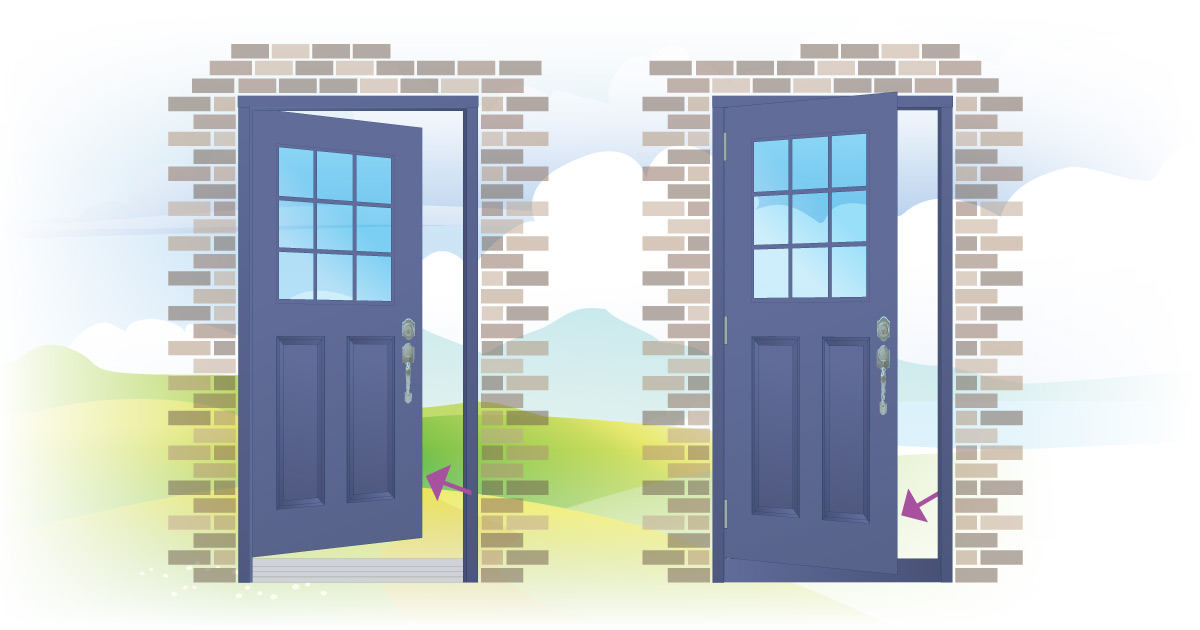
Outswing doors offer exceptional wind resistance and security against kick-ins, provided they are built with non-removable, closed-pin hinges (typically only used in sheltered areas). However, in heavy snow situations, a deep snowdrift or ice buildup on the porch can trap you inside. Inswing doors eliminate the risk of snow blockages, but in a compact foyer, the inward swing can collide with coat closets, crowd stairways, or bottleneck hallway traffic.
b. Light Switch Access & Handing
Specifying the wrong swing direction (left-hand vs. right-hand) is one of the most common ordering mistakes. Verify where your foyer light switches and key drops are located. You should never have to step around an open door slab just to flick on the lights.
c. Wall Thickness & Jamb Depth
Older homes with 2x4 framing require a 4 9/16" jamb depth, while modern 2x6 framing requires 6 9/16". If your estimator fails to factor in the total wall thickness, including exterior sheathing, brick veneer, stone, or siding transitions, the crew will have to build awkward jamb extensions on-site, creating clunky interior lines and potential moisture leaks.
d. Furniture Access & Clear Opening Width
Upgrading a tight 32-inch door to a 36-inch slab makes daily living noticeably easier, especially when moving appliances, furniture, or navigating strollers and mobility aids.
e. Low-Profile Thresholds and Accessibility
Standard, tall exterior sills are notorious tripping hazards. If ageing-in-place or step-free access is a priority, ask your sales rep about low-profile, thermal-break thresholds.
f. Lever Handlesets vs. Round Knobs
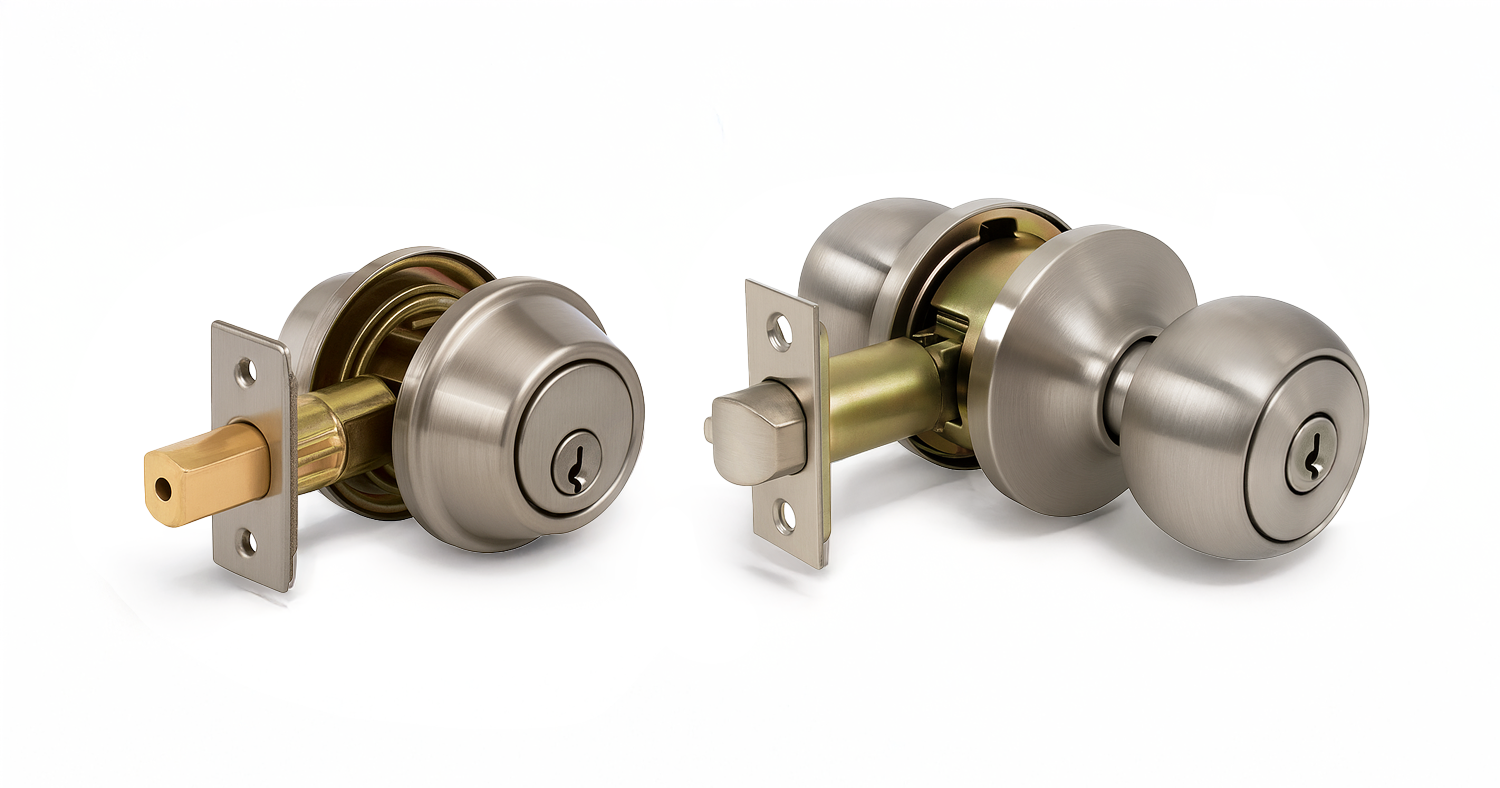
Lever-style handlesets are significantly easier to operate than round knobs when carrying groceries or for family members with arthritis and reduced grip strength.
3. Choosing the right door for
Canadian weather & noise
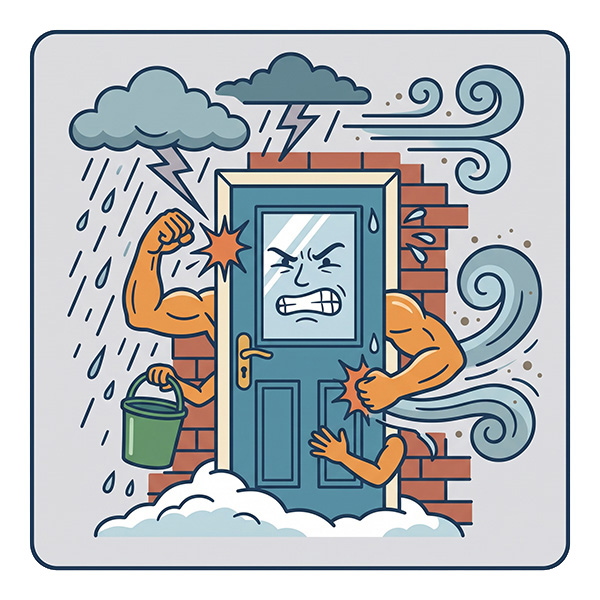
Showroom aesthetics mean nothing if the door cannot handle real-world exposure.
a. Solid Wood in Full Exposure
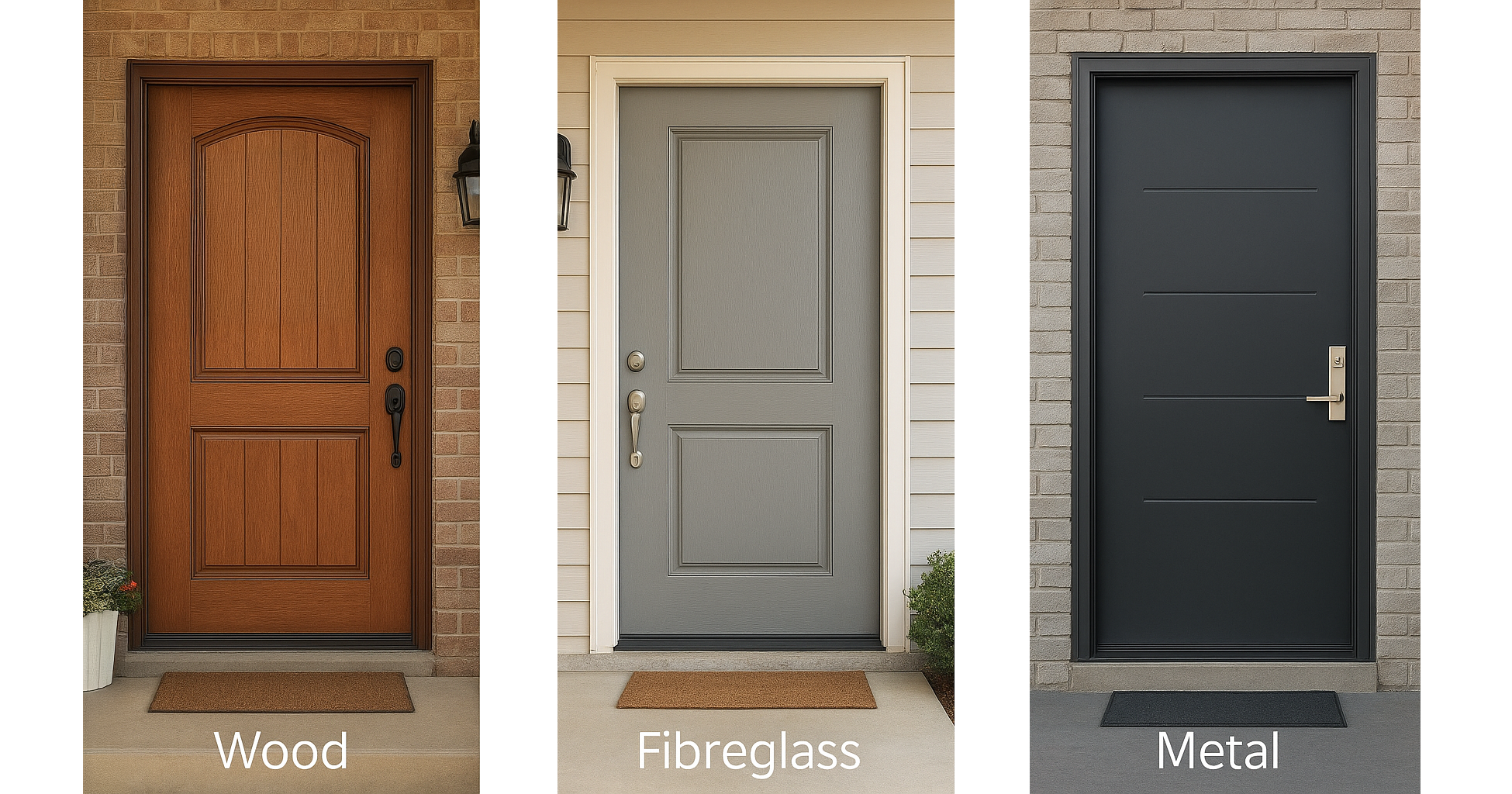
Unless sheltered by a deep, covered porch, a natural wood door on an unprotected south- or west-facing wall is asking for trouble. Intense UV exposure paired with extreme freeze-thaw cycles will warp the frame and crack the finish within a few seasons.
b. Basic Steel Doors vs. Dedicated Thermal Breaks
Inexpensive builder-grade steel doors conduct freezing temperatures directly into the home. During cold snaps, you will experience heavy interior condensation, frost buildup, and cold drafts. Choose insulated fibreglass, or ensure any steel system specified includes a built-in thermal break to isolate the exterior metal skin from the interior frame.
c. Fibreglass Composite Systems
High-performance fibreglass offers the look of stained wood or smooth painted finishes without rotting, denting, or warping under extreme temperature swings.
d. Full-Frame Pre-Hung System vs "Slab-Only" Swaps
It is tempting to cut costs by buying just the door slab and hanging it into your existing wood frame. However, if that old frame is out of plumb, out of square, or rotting at the bottom corners, a new slab will never seal properly. Always invest in a complete pre-hung system with a rot-resistant composite jamb and sill.
e. Street Noise & Sound Insulation
If you live on a busy road or near transit routes, standard thermal insulation will not fully block traffic noise. Ask about Sound Transmission Class (STC) ratings and laminated acoustic glass inserts to keep the home quiet.
4. Glass, colour traps, and red tape
There's a lot more to a door than you might think. Glass, paint, security and uncommon restrictions are well worth your consideration.

a. Dark Paint Behind Storm Doors (The Oven Effect)
If you paint a door black, charcoal, or dark navy and place it behind a full-glass storm door, direct sunlight creates an intense greenhouse effect. Temperatures between the doors can soar beyond 80°C (175°F) - blistering the paint, warping composite door skins, melting weatherstripping, and immediately voiding the manufacturer's warranty.
b. Security Beside Sidelites
If your entry design features wide glass sidelites or large glass inserts right beside a single deadbolt, an intruder can break the glass and reach inside to turn the thumbturn. Use laminated security glass, multi-point lock systems, or double-cylinder locks where local building and fire codes permit.
c. Cold-Climate Energy Ratings & Rebate Labels
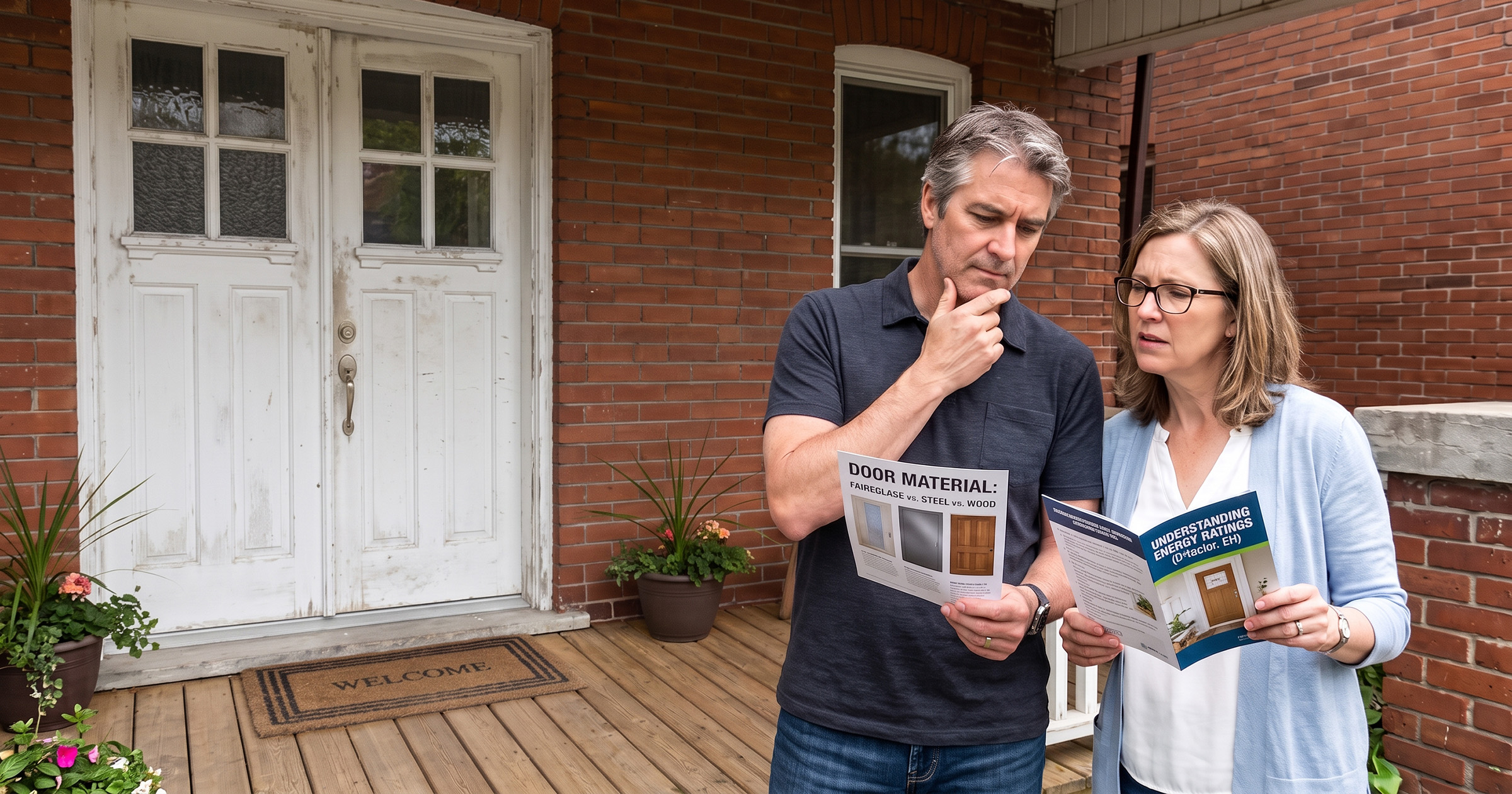
Never accept a generic claim of "energy efficiency." Have the sales rep show you the official NRCan / NFRC label detailing the U-factor (rate of heat loss) and the Energy Rating (ER). If you plan to apply for federal or provincial energy-efficiency grants, verify that your specific glass style and frame configuration meet the strict minimum climate zone requirements.
d. Permits for Opening Modifications
If you are widening an opening - such as converting a single door into a double door or adding sidelites - you are altering a load-bearing exterior wall. This requires proper structural header calculations, support framing, and may require a municipal building permit depending on your location within the Ottawa area. Ensure your contractor handles the engineering modifications and permits (if required) upfront.
e. Homeowner Association (HOA) & Heritage Restrictions
If your property falls under a homeowners association, condo board, or designated heritage conservation district, check their bylaws before signing. Many enforce strict guidelines regarding exterior paint colours, hardware finishes, or traditional wood profiles over modern smooth fibreglass.
5. Hardware specifications that protect your investment
Your door’s long-term weather sealing performance and security rely entirely on the mechanical hardware you select.

a. Multi-Point Locking Systems
Standard single-point locks only latch in the centre. With seasonal temperature swings, extra tall or composite doors can bow slightly at the top and bottom corners, breaking the weather seal. A multi-point locking system engages at three distinct points along the frame, pulling the entire slab tight against the weatherstripping every time it locks.
b. Hardware Grade Ratings
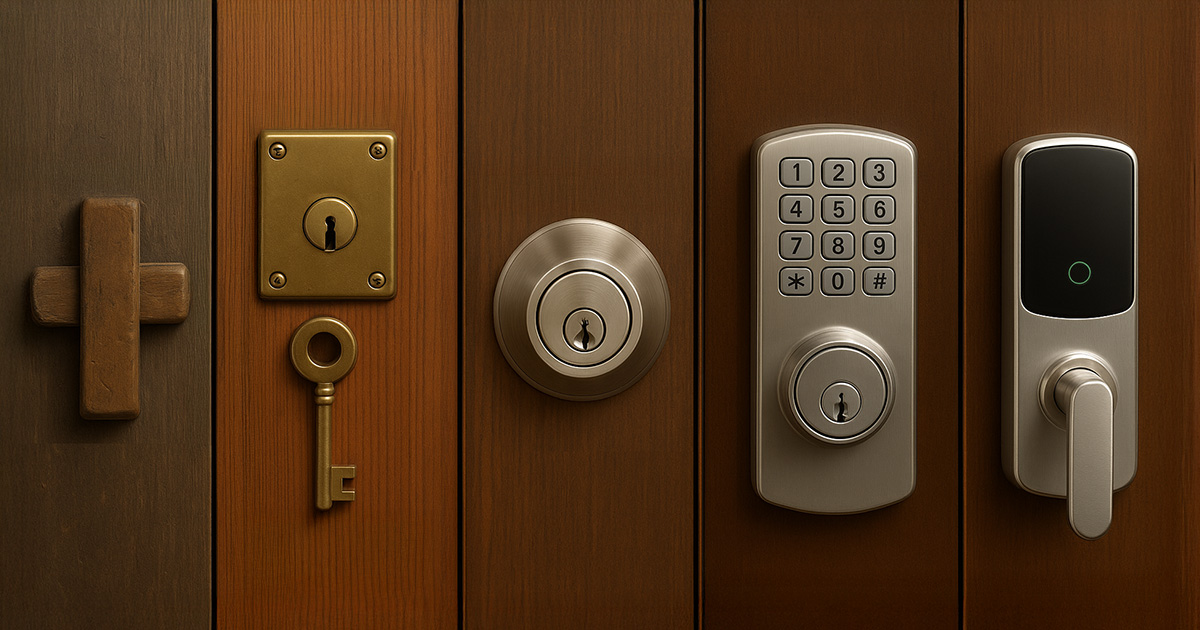
Avoid builder-grade ANSI Grade 3 (cheap builder-grade locking) hardware on premium doors. Choose ANSI Grade 1 or Grade 2 locksets and deadbolts for real forced-entry protection.
c. Smart Locks in Freezing Temperatures
Motorised smart deadbolts require perfect alignment. If the door must be pushed hard to latch against the weatherstripping, that tiny motor will bind, strain, and drain batteries rapidly during winter. Make sure the installation is aligned smoothly and use cold-rated lithium batteries.
d. Heavy-Duty Hinges & Long Fasteners
Heavy, insulated fibreglass or steel doors (especially those with decorative glass) will eventually sag on lightweight hinges. Request heavy-duty ball-bearing hinges with non-removable pins (for outward-swinging doors). Request the installers drive at least one 3-inch structural screw through each hinge directly into the house framing, not just into the thin door jamb.
6. Managing lead times and project planning
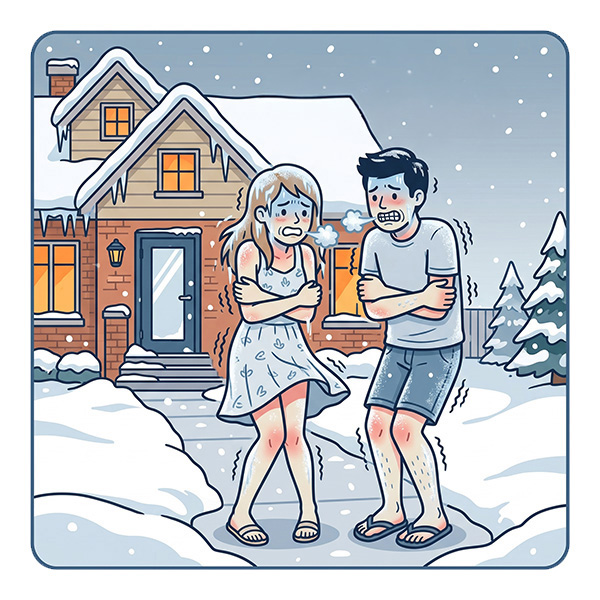
Like the song says "we can't always get what we want", at least not always when we want.
Custom Build Schedules
Don't wait until October to replace a leaking, drafty entrance. While standard steel slabs sit on big-box store shelves, a custom, factory-finished fibreglass system with sidelites, decorative glass, or multi-point hardware typically carries an 8 to 16-week build time. Order in late spring or summer so you aren't waiting on a factory shipment during winter freeze-up.
7. Critical installation standards
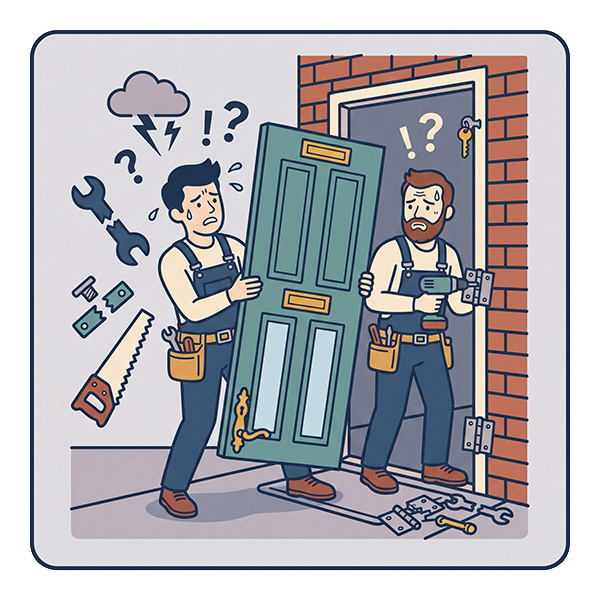
Even a top-of-the-line door will fail if the installation crew takes shortcuts on site.
a. Sub-Sill Pan Flashing
An entrance door should never sit directly onto raw subfloor framing. Installers must place a rigid sub-sill pan with an upturned rear back-dam underneath the threshold. Any wind-driven water or melted snow that gets under the sill is caught by the pan and drained safely out over the exterior brick or siding.
b. Low-Expansion Polyurethane Foam
High-expansion construction foam expands with enough pressure to bow a door jamb inward, causing the door to stick and bind. The crew must strictly use low-expansion, closed-cell foam formulated specifically for windows and doors.
c. Level, Plumb, and Square Alignment
If the frame is even slightly out of alignment, the weatherstripping will not compress evenly, resulting in drafts and moisture leaks.
8. Warranties, maintenance & the final walkthrough
Before you sign off and make the final payment on installation day, review the paperwork and perform a hands-on quality check with your installer.

a. Product vs. Workmanship Warranties
A 20- or 25-year manufacturer warranty covers factory defects like delaminating fibreglass skins or failed glass seals. It does not cover water leaks, drafts, or operational sticking caused by improper installation. Ensure you have a separate, written workmanship and labour warranty directly from your installer.
b. Maintenance Fine Print
If you purchase a natural wood door or a stained woodgrain finish, read the warranty conditions carefully. Many manufacturers require the homeowner to document applying a fresh UV clear coat every 2 to 3 years to keep the finish warranty valid.
Summary
Because getting it right involves precision sizing, weatherproofing, and real structural carpentry, most people hire a full-service supply-and-install service. But even when you hire the pros, things can go sideways quickly. Between pushy sales tactics, poor material choices, and subtle installation shortcuts, it pays to know your stuff, or at least the stuff above.