Insights > Article > Posted: 2026-Nov-13, Updated: 2026-Nov-18
Repair or Replace? 10 Signs It's Time for a New Entrance Door
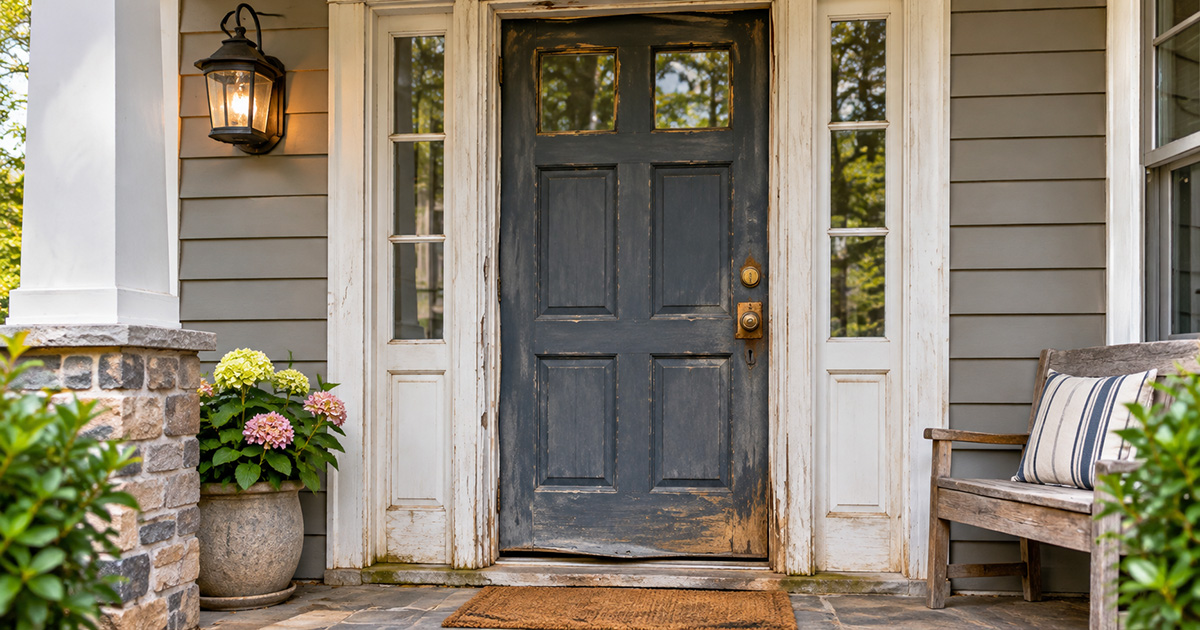
Knowing when to repair or replace your front door can help you avoid unnecessary expenses, improve energy efficiency and protect your home. While minor problems such as worn weatherstripping or loose hardware can be repaired, persistent drafts, warping, structural deterioration and moisture damage may suggest it's time for a new entrance door. This guide discusses 10 warning signs to look for when deciding whether repair or replacement is your best option.
- How long should an entrance door last?
- 10 signs it's time to consider replacing your entrance door
- Repair or replace? A quick decision guide
- When does repairing an entrance door no longer make financial sense?
- The benefits of replacing an ageing entrance door
- Frequently asked questions
- Summary
- Related articles
- Request a quote
How long should an entrance door last?
Here in Ottawa, entrance doors are exposed to often severe, demanding conditions. Frigid winters, sweltering summers, high humidity, driving wind/rain and endless freeze-thaw cycles can gradually wear down door materials, seals, frames and hardware.
Rather than replacing your front door based solely on its age, consider how well it performs. An older, well-maintained door may provide excellent protection, while a poorly installed or heavily environmentally battered newer door may deteriorate sooner than expected.
10 signs it's time to consider replacing your entrance door
1. Persistent drafts and air leakage
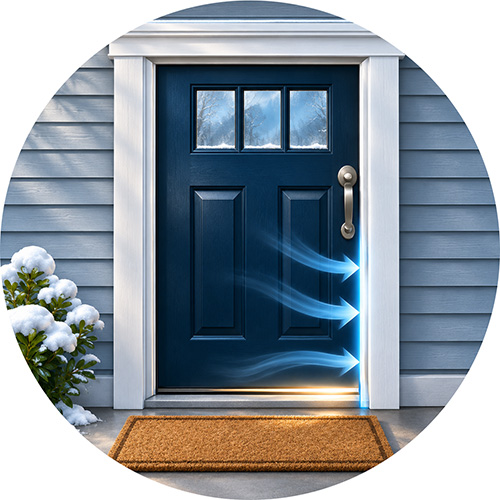
Do you feel cold air around your entrance door during the winter? Can you see daylight between the door edge and its frame?
Air leakage increases heating and cooling costs/demands and creates chilling cold spots near your entrance. Over time, the door components may shift, shrink or deteriorate, allowing outside air to enter the home.
2. Warping, bowing or cracking
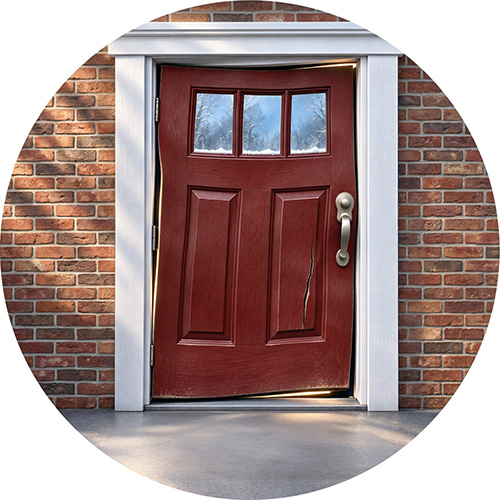
Repeated exposure to the elements can cause some doors to warp, bow or crack. Wood doors can be especially susceptible to these problems if they are not maintained properly.
A distorted door may develop gaps, become difficult to operate and lose its ability to provide weather protection.
3. Rust and corrosion
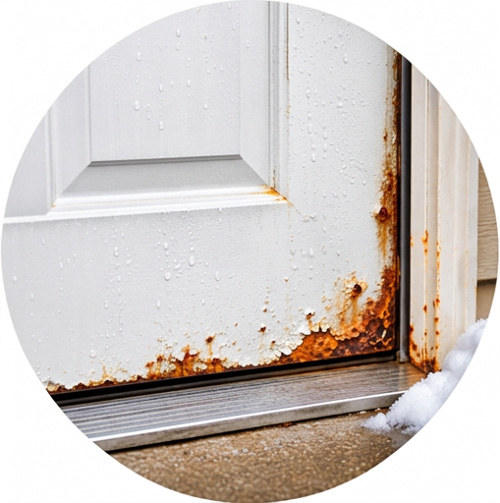
Steel entrance doors are designed to be durable, but scratches, dents and deteriorating protective finishes can expose the underlying metal to moisture.
Rust often begins around the bottom of the door, along its edges or in areas where the protective finish has been damaged. Left untreated, corrosion can spread and eventually compromise the door's integrity.
4. Rotting or deteriorating door frames
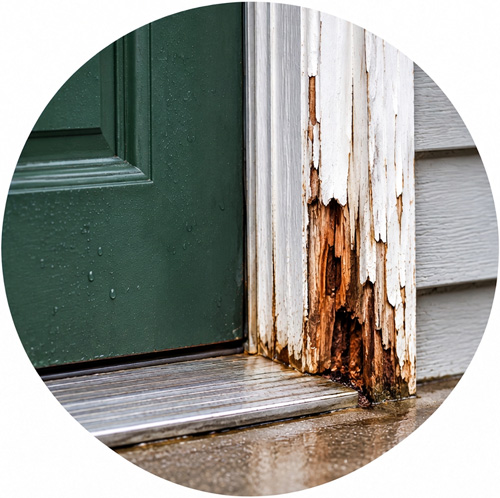
An entrance door is only as reliable as its supporting frame. Wooden door frames and jambs can absorb moisture near the threshold or where exterior sealing has failed over time.
Signs of deterioration include: soft wood, discolouration, peeling paint, cracking and visible decay.
A deteriorating frame can affect door alignment, weather resistance and security, even when the door itself appears to be sound.
5. Water infiltration
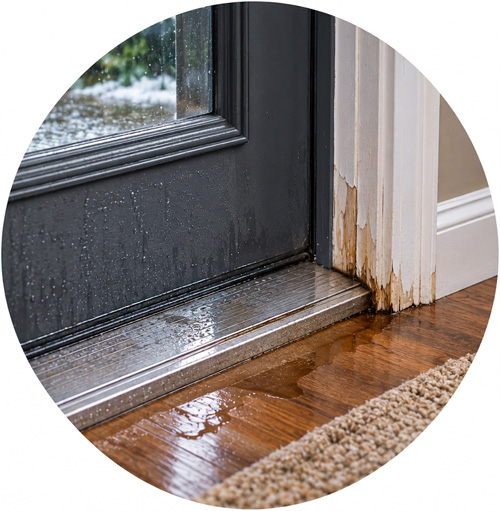
Water entering around your entrance door should never be ignored. Even small amounts of recurring moisture can damage flooring, trim, framing and surrounding building materials.
Look for water stains, damp flooring, peeling finishes, swollen wood or moisture collecting near the threshold after intense outside freezing temperatures, heavy rain or melting snow.
Water infiltration can result from failing seals, improper installation, inadequate flashing or damaged door components.
6. Difficulty opening, closing or locking your door
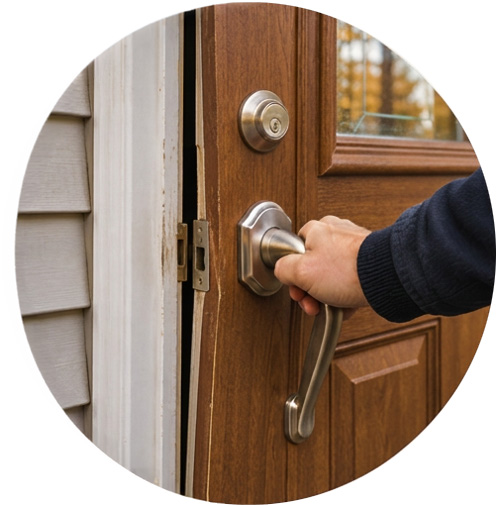
An entrance door should open, close and lock smoothly without excessive effort. If you regularly need to push, pull or lift your door to close it properly, something may be out of alignment.
Common causes include loose hinges, seasonal expansion, worn hardware, shifting frames or structural movement.
7. Persistent condensation or fogging
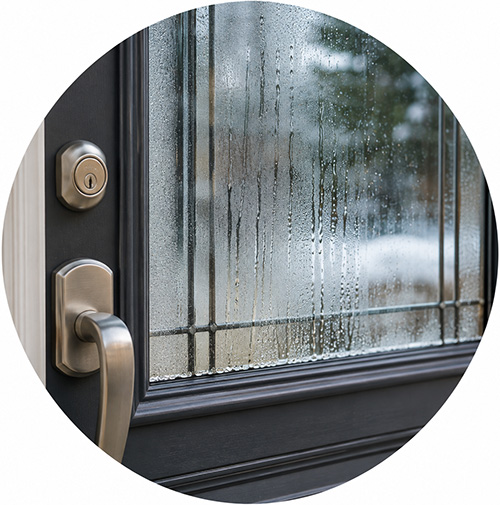
Condensation on an entrance door or its glass insert can occur when warm, humid indoor air contacts a cold surface.
Occasional surface condensation during extremely cold weather is not necessarily a sign of door failure. However, excessive condensation, frost accumulation, or moisture trapped between glass panes may indicate a problem - the insulated glass unit's (IGU) seal has failed.
8. Deteriorating seals and weatherstripping
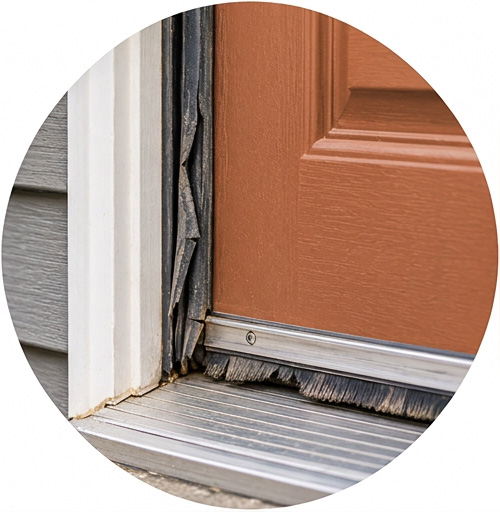
Weatherstripping, door sweeps and threshold seals play an important role in keeping cold air, moisture, dust and insects outside your home.
Over time, these components can become brittle, compressed, cracked or detached, reducing their effectiveness.
9. Compromised home security
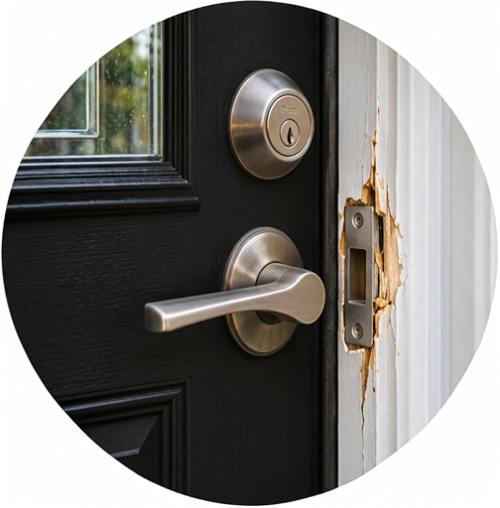
Your entrance door is one of your home's primary lines of defence. A weakened door, deteriorating frame or unreliable locking mechanism can make it more vulnerable to forced entry.
Loose locks, damaged strike plates, cracked frames and deteriorating door materials should all be taken seriously.
Today's entrance door systems offer durable construction, reinforced components and advanced locking options.
10. Ageing appearance and outdated performance
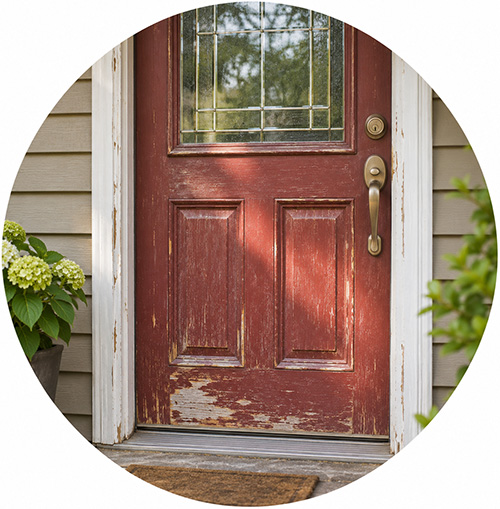
Sometimes an entrance door continues to function but no longer meets your expectations for appearance, comfort, energy efficiency or maintenance.
Faded finishes, outdated styling, poorly insulated construction and recurring maintenance requirements can detract from your home's appearance and overall performance.
Today's steel and fibreglass entrance doors offer a wide variety of styles, finishes, decorative glass options and energy-efficient features.
Repair or replace? A quick decision guide
Not every entrance door problem requires a complete replacement. Use the following comparison as a general guide when evaluating the condition of your door.
| Problem | Consider repairing | Consider replacing |
|---|---|---|
| Drafts | Worn weatherstripping | Distorted door or frame |
| Warping | Minor surface imperfections | Permanent deformation |
| Rust | Minor surface corrosion | Extensive corrosion or holes |
| Wood rot | Small, localized damage | Extensive structural decay |
| Water infiltration | Failed seals or flashing | Significant moisture damage |
| Difficult operation | Loose or misaligned hardware | Permanently distorted components |
| Condensation | High humidity or failed glass seal | Poor overall thermal performance |
| Deteriorating seals | Replaceable weatherstripping | Structural misalignment |
| Security | Worn or outdated hardware | Weakened door or frame |
| Appearance | Faded paint or finish | Multiple age-related problems |
When does repairing an entrance door no longer make financial sense?
Repairing an entrance door is often the most economical option when the problem is isolated, relatively inexpensive and unlikely to recur.
However, when several components begin to deteriorate at the same time, the cumulative cost of repairs can make replacement a more attractive investment.
Before spending money on an older entrance door, consider:
- How often the door requires repairs or maintenance.
- The cost of upcoming repairs compared with replacement.
- Whether the door provides adequate insulation and weather protection.
- The condition of the frame and surrounding components.
- Whether replacement parts are still readily available.
- How many additional years of reliable performance a repair is likely to provide.
Replacing individual components may temporarily improve an ageing door's performance. However, replacing the complete entrance door system allows the door, frame, threshold, seals and hardware to function together as intended.

Tip: The age of your entrance door alone is not necessarily a reason to replace it. Its structural condition, energy performance, security and ongoing maintenance requirements are generally more reliable indicators.
The benefits of replacing an ageing entrance door
A new entrance door can provide benefits that extend well beyond improving the appearance of your home.
Depending on the product selected and the quality of its installation, a modern entrance door system can offer:
Insulated construction and effective seals can help reduce heat transfer and air leakage.
Better protection against cold drafts and seasonal temperature fluctuations.
Durable construction, reinforced components and modern locking options.
Better protection against wind, rain, snow and moisture.
Modern materials and finishes can require less ongoing maintenance than older doors.
A wide variety of styles, colours, finishes and decorative glass options.
Opportunities to complement your home's architectural style and personal preferences.
A complete door system designed to work together, from the frame and threshold to the seals and hardware.
For Ottawa homeowners, choosing a quality entrance door designed for Canada's volatile climate and having it professionally installed can make a significant difference in its long-term performance.
Frequently asked questions
How do I know when it's time to replace my front door?
Common signs include persistent drafts, significant warping, extensive rust, rotting frames, water infiltration, difficulty operating the door and compromised security. If several of these problems occur together, replacement may be more practical than continued repairs.
What is the average lifespan of an entrance door?
A quality entrance door can last several decades, depending on its materials, installation, maintenance and exposure to the elements. The door's structural condition and overall performance are generally better indicators of when replacement is necessary than its age alone.
Is it cheaper to repair or replace an exterior door?
Repair is generally less expensive when dealing with isolated problems such as worn weatherstripping, loose hinges or damaged hardware. Replacement may offer better long-term value when the door has extensive deterioration, poor energy performance or recurring problems.
Can I replace my front door without replacing the frame?
Yes, provided the existing frame is structurally sound, properly aligned and compatible with the new door. However, replacing the complete entrance door system may provide better sealing, insulation, alignment and overall performance when the existing frame is ageing or damaged.
Can a warped entrance door be repaired?
Minor operational problems associated with misalignment or hardware may be correctable. However, significant or permanent warping of the door itself is often difficult to repair effectively and may require replacement.
Does condensation mean my entrance door needs replacing?
Not necessarily. Surface condensation may be caused by high indoor humidity and cold outdoor temperatures. Moisture between glass panes generally indicates a failed glass seal. Replacement should be considered when condensation is accompanied by other significant performance or structural problems.
Will replacing my front door improve energy efficiency?
Replacing an older, poorly insulated or drafty entrance door with a properly installed, energy-efficient door can reduce air leakage and heat transfer, helping improve indoor comfort and potentially reduce heating and cooling costs.
Can an entrance door be replaced during an Ottawa winter?
Yes. Professional entrance door installers can replace exterior doors during the winter when weather conditions permit, using installation methods that minimise exposure to outdoor temperatures and ensure proper sealing.
Is it time for a new entrance door?
A well-functioning entrance door should provide comfort, security, weather protection and an attractive welcome to your home. While regular maintenance and occasional repairs can extend its useful life, there comes a point when continued repairs may no longer be the best investment.
Related articles
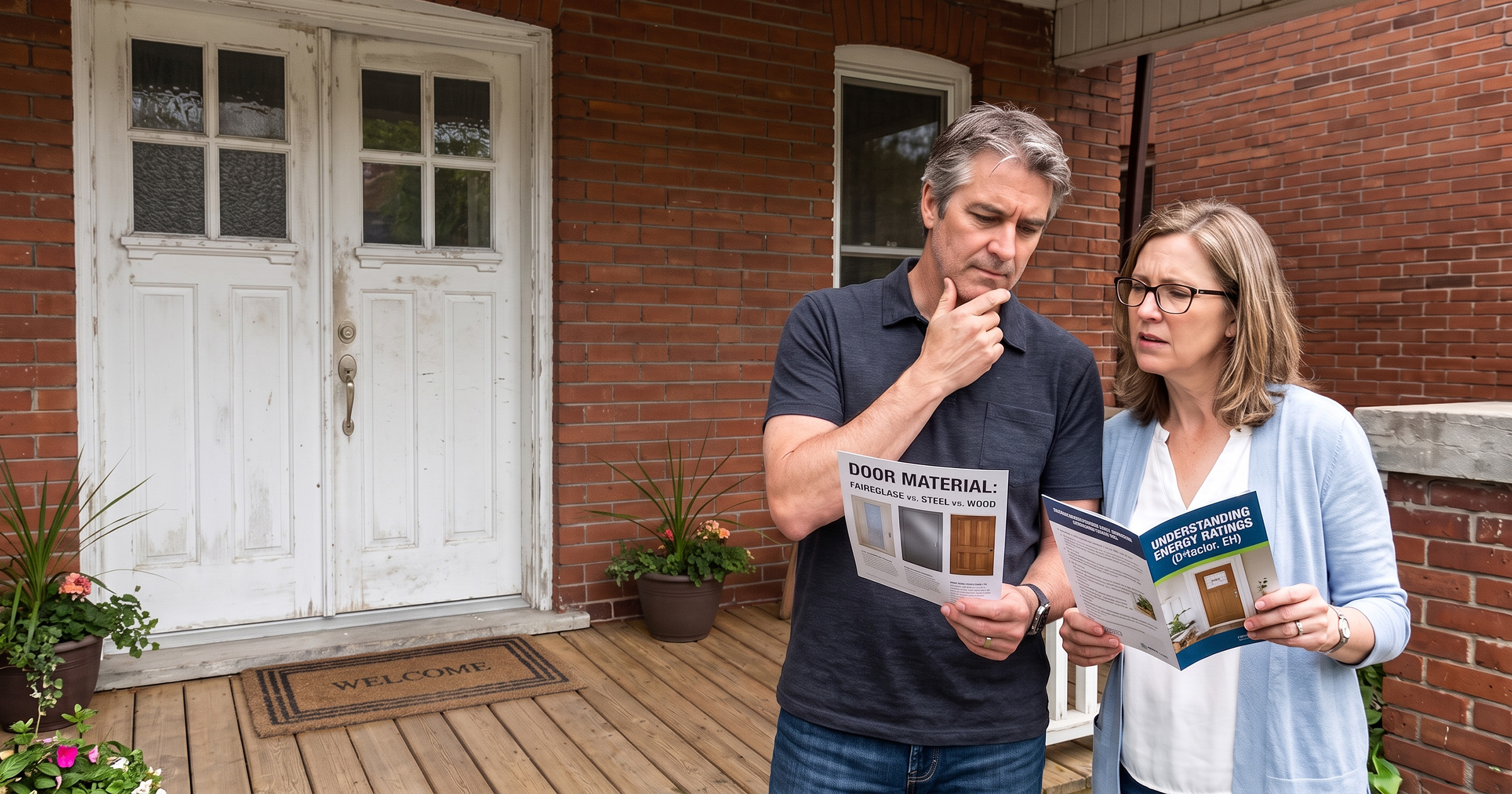

Discover what a new entrance door can do for your home
At Bayview Windows & Doors, we offer a wide selection of steel and fibreglass entrance doors to complement your home and withstand Ottawa's demanding climate.
Our experienced team can help you explore replacement options that suit your home's architectural style, performance requirements and budget.

Categories:

