Choose Bayview Windows for Unmatched Entryway Expertise

A beautiful front door is only as good as the team that installs it. Because your exterior doors serve as your home's primary line of defence against both intruders and harsh seasonal elements, choosing an experienced local partner is the ultimate first step.
At Bayview Windows, we help you navigate the crucial differences in materials, security upgrades, and weather sealing.
Explore our curated list of door tips below to see how we help you protect your investment, eliminate drafts, and elevate your home's curb appeal for decades to come.
Choose Bayview Windows for Expert Local Window Guidance
Before diving into technical specifications, the most critical step in any window project is partnering with a team that understands your home's unique environmental demands.
At Bayview Windows, we don't just sell windows; we provide tailored solutions engineered specifically to withstand severe local freeze-thaw cycles while maximising your indoor comfort.
Browse the expert maintenance, energy efficiency, and structural tips below to learn what to look for, and how our team ensures a flawless, high-performance installation from day one.
Red Flag Warning Signs (Sales/Quotes)

Vague Scope of Work:
A single line item like "Replace 8 windows - $8,000" with no mention of brand, frame type, glass specs, or labour details leaves room for hidden add-ons later.
High-Pressure "Sign Today"
Discounts:
Claims that a discount is "only valid if you sign before I leave the house" are designed to prevent you from getting competing bids. Real pricing remains valid for at least 30 days.
Parts-Only Warranties:
If a quote boasts a "Lifetime Warranty," check the fine print. Many cover only the glass/vinyl parts, meaning you’ll pay out-of-pocket for labour and service calls if a seal fails.
Unusually Low Upfront Deposits:
Be cautious of contractors requiring 50% or more upfront before materials are ordered. Standard industry practice is a modest deposit (10% to 30%), with the balance paid upon project completion and inspection.
Skipping On-Site Measurements:
Any contractor offering a firm, final binding quote over the phone or via email without measuring your rough openings in person is likely to add extra fees for unexpected job-site conditions.
Leverage Like-for-Like Competitor Quotes

Gather at least 3 detailed quotes from local, reputable installation companies.
Ensure each contractor provides identical specs (e.g., frame material, glass packages, and installation type).
Showing a contractor a competitor's lower quote for identical specifications gives you clear leverage to ask for a price match or an added feature upgrade.
Ensure Parts and Labour Warranty Terms

Many manufacturer warranties cover replacement parts (glass, hardware) for years, but exclude the labour required to service them.
A technician’s service visit to replace a seal can cost hundreds out of pocket.
Always verify if the installer provides a dedicated labour warranty alongside the manufacturer's parts warranty.
Verify Scope of Work: Trim, Clean Up, Disposal

A deceptively low initial estimate might exclude essential tasks. Ensure your written quote explicitly details:
- Interior and exterior trim, casing, and capping work.
- Job site cleanup.
- Removal and eco-disposal fees for old windows/doors.
Compare Full-Frame vs. Retrofit (Pocket) Quotes
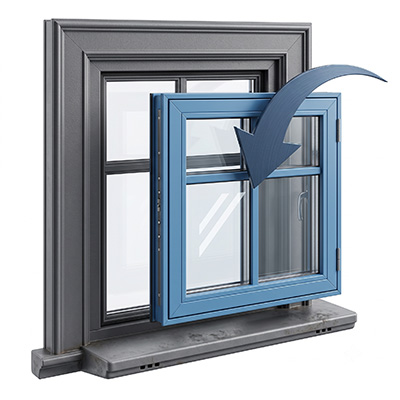
Retrofit (insert) installations are less labour-intensive and cost significantly less than full-frame replacements.
If one contractor’s bid is thousands of dollars cheaper than others, verify if they quoted a retrofit while competitors quoted a full-frame teardown.
Paying a high price for a basic retrofit installation is a common way homeowners overpay.
Watch for Fake Discounts and High-Pressure Sales Gimmicks

Be cautious of quotes offering "40% off if you sign today" or "buy one get one free."
Home improvement companies often inflate their baseline prices to make these promotions appear dramatic.
Always evaluate the final total out-of-pocket cost, not the advertised percentage discount.
Bulk Buy by Replacing Whole Elevations

Replacing windows one by one leads to higher per-window installation and delivery fees.
If replacing every window at once exceeds your budget, replace them by full sides/elevations of the house (e.g., all rear-facing windows together).
Contractors save on equipment setup time and volume shipping, allowing them to pass on a bulk rate discount.
Buy in the Off-Peak Winter Months

Window and door installation demand surges during spring, summer, and early autumn.
During winter (January to March), sales slow down, making contractors far more willing to offer seasonal labour discounts, free upgrades (such as free triple-pane glass), or lower total project pricing to keep their installation crews working.
Adjust Door Hinge Pins for Seasonal Dragging

When a door begins rubbing on the top corner or dragging on the threshold, homeowners often shave down the door.
Instead, check the top hinge: removing the centre screw from the door-jamb side of the top hinge and replacing it with a 3-inch structural screw will pull the entire door frame back into alignment and instantly lift a sagging door.
Fixing Folded Weatherstripping

If vinyl or pile weatherstripping becomes bent or squished during installation or severe weather, cold air will leak through the gap.
You don't always need to replace it; gently warming the deformed rubber or vinyl with a hair dryer on medium heat allows the material to regain its original shape and seal properly.
Inspect Exterior Caulk

The joint between your exterior window casing and your home's siding relies on sealant. Don't just check for cracks; look for "beading.
Quality sealant should be smoothly tooled into the gap to form a flexible bridge.
If the caulking is pulling away from either edge (adhesive failure) or splitting down the middle (cohesive failure), it needs to be cut out and replaced.
Vinyl Maintenance and Longevity

Avoid chemical solvents or abrasive scouring pads to clean dirty white vinyl window frames; they scratch the vinyl's protective smooth outer layer, creating micro-grooves that trap dirt permanently.
Use a gentle slurry of baking soda and water or mild dish soap to lift stubborn dirt without dulling the finish.
Ensure Multi-Point Locks are Used on High Doors
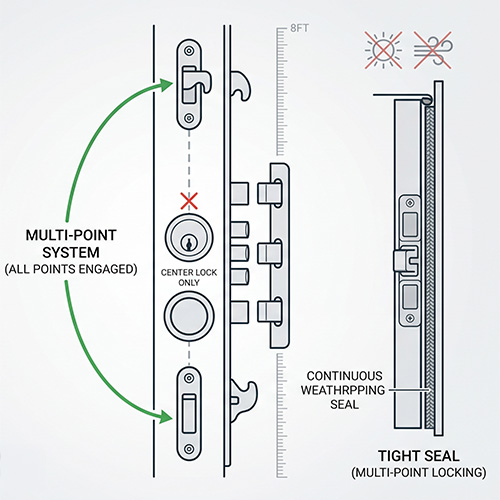
Standard deadbolts only secure a door at the centre handle. For doors 8 feet tall or fibreglass/wood doors exposed to direct sunlight, request a multi-point locking system.
It latches at the top, middle, and bottom simultaneously, pulling the door tight against the weatherstripping to prevent thermal bowing and drafts.
Account for Rough Opening Shim Gaps
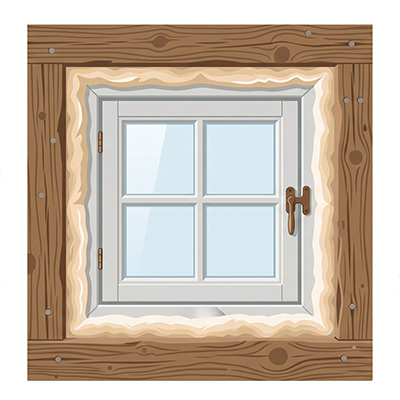
A common mistake when measuring for custom windows is forgetting to leave space for insulation.
A proper installation leaves a 3/8" to 1/2" gap around the frame for expansion, shimming, and low-expansion polyurethane spray foam.
Ordering a window that fits the rough opening too tightly leaves no room for proper insulation or frame expansion in summer heat.
Grilles Between Glass vs Simulated Divided Lites
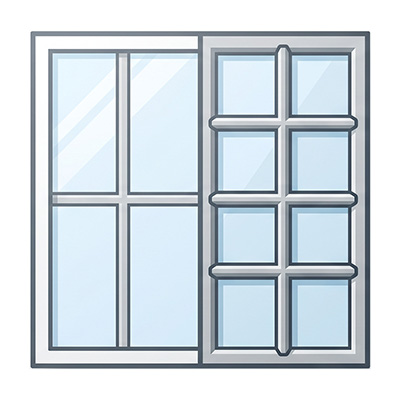
If you want decorative grilles (mullions), consider maintenance before buying:
Grilles Between Glass (GBG):
Sealed inside the glass panes. Makes cleaning the glass effortless, but offers a flatter appearance.
Simulated Divided Lites (SDL):
Adhered to the outside of the glass for an authentic, traditional dimensional look, but requires extra effort to wipe around each frame.
Want natural light and high thermal performance?

High-efficiency glass coatings can sometimes tint your glass slightly blue or green. If natural sunlight is your priority, look at the Visual Transmittance (VT) rating on the energy label. Ratings range from 0 to 1; aim for 0.50 or higher if you want maximum natural light alongside high thermal performance.
Match Low-E Coating Positions to Wall Orientations
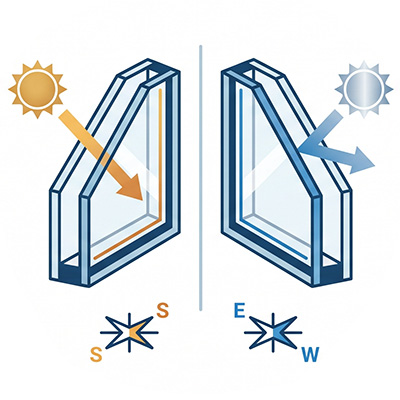
Not all Low-E (low-emissivity) glass should be configured the same way.
South-facing windows:
Choose a soft-coat Low-E on Surface 3 (the inner pane’s outer face) to allow free solar heat gain during winter.
East- and West-facing windows:
Place the Low-E coating on Surface 2 (the outer pane’s inner face) to block harsh morning and afternoon sun, keeping your home cooler in summer.
Triple Pane IGU's:
Talk to your window expert to ensure you will get the results you are looking to achieve.
Prioritize Warm-Edge Composite Spacers
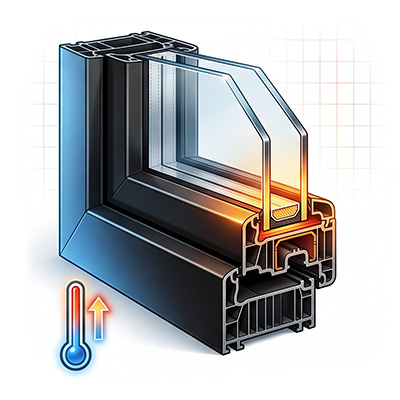
The spacer holds your glass panes apart. Traditional aluminium spacers act as thermal bridges, conducting freezing outside temperatures directly to the interior glass perimeter and causing winter condensation.
Look for silicone-foam or composite warm-edge spacers (like Super Spacer®) to eliminate thermal conduction around the edges.
Match Gas Fill to Glass Spacing (Argon vs. Krypton)

While Argon gas is standard, its thermal performance drops if pane spacing is narrower than 1/2 inch.
If you’re opting for triple-pane windows with narrow air gaps (1/4 to 3/8 inch), request Krypton gas; it’s denser and provides significantly better insulation in tight spaces.
Consider Adjustable Door Thresholds (Sills)
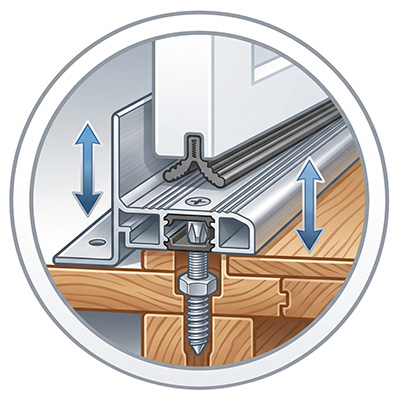
Over time, continuous foot traffic and natural seasonal shifting cause door weatherstripping to compress, creating tiny draft gaps at the bottom.
Buying an entry door with an adjustable sill allows you to turn a few screws to raise the threshold, restoring an airtight seal without replacing parts.
Verify Egress Clearance for Bedrooms
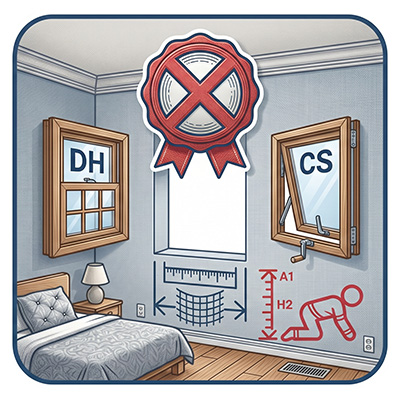
Replacing double-hung (DH) windows with casements (CS), or vice versa, specifically in bedrooms, can accidentally violate local building code.
Egress rules mandate a minimum net clear opening size and height for emergency escape.
Always verify clear opening dimensions (not total frame size) before finalising your window order.
Use Dry Silicone Spray — Never WD-40 or Grease

Grease and standard WD-40 attract dirt, grit, and bugs, which quickly wear down casement operators, multi-point locks, and door hinges.
Petroleum products also deteriorate rubber weather seals over time.
Stick exclusively to dry silicone spray or PTFE lubricant to keep tracks and gears running smoothly.
Inspect the Hidden Sweep Under Entry Doors
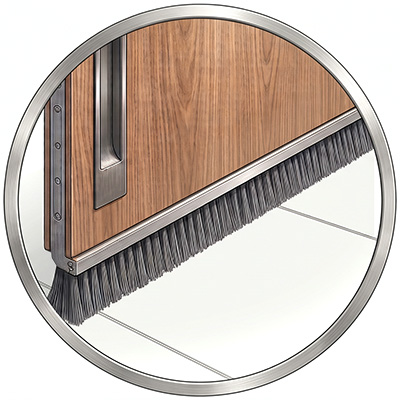
Homeowners often check side weatherstripping but forget the door sweep attached to the bottom edge of the door slab.
Dirt and ice can tear the flexible rubber fins underneath.
Feel along the bottom sweep once a year to catch torn seals before cold drafts set in.
Glass Condensation Diagnostic
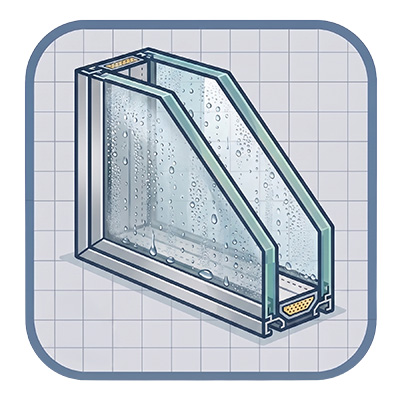
Condensation doesn't always mean a window is failing. Knowing where the moisture is tells you what to do:
Inside surface:
High indoor indoor humidity. Turn down your humidifier or run bathroom exhaust fans.
Between the panes:
Failed IGU (Insulated Glass Unit) seal. The glass unit needs replacement.
Outside surface:
High outdoor humidity and high-efficiency glass! It proves your window is blocking indoor heat from warming the outer glass.
Window Cleaning - The Newspaper Trick is an Outdated Myth

Despite the popular old-school belief that newspaper leaves a streak-free shine on glass, you should leave this method in the past.
Modern printing inks are formulated differently than they were decades ago; using a wet newspaper today will break down the ink and leave a cloudy, grey petroleum residue directly on your glass.
For a truly flawless finish, stick to a high-quality rubber squeegee or a lint-free microfiber cloth.
Do Not Use a Pressure Washer to Clean Windows

It is incredibly tempting to blast away exterior grime on a second-story window using a power washer, but you should never use high-pressure sprayers on residential windows.
The intense hydraulic pressure can easily crack the glass, warp the vinyl sashes, snap delicate plastic trim, and, worst of all, completely blow past the rubber gaskets and weather seals, destroying your window's airtight integrity and causing expensive hidden leaks.
Condensation - Balancing In-Home Humidity to Protect the Interior of Your Home
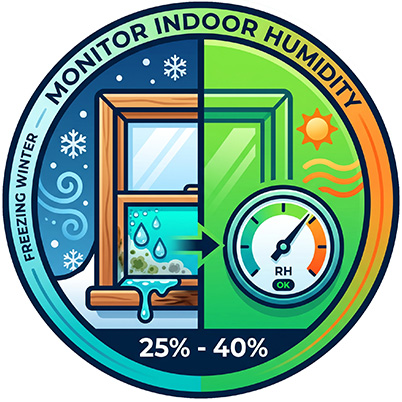
Seeing condensation gather on the lower edge of your interior window glass during a freezing Ottawa winter isn't always a sign of window failure; it's usually a sign of high indoor humidity.
When warm, humid indoor air hits a cold glass pane, moisture pools and can drip down to rot your wooden trim or sprout mould; to protect your home interior, actively monitor relative humidity and try to maintain between 25% and 40% during the freezing winter months.
Preventing Heat Damage on Dark Factory Finishes

Opting for a bold, trendy dark colour or deep factory stain on your front door adds instant, stunning curb appeal, but dark surfaces absorb an incredible amount of passive solar heat.
To prevent the finish from fading, bubbling, or prematurely cracking under intense UV exposure, confirm that your supplier uses high-grade, heat-reflective factory coatings specifically engineered to bounce away destructive solar heat.
Steel vs. Fibreglass for Harsh Freeze-Thaw Cycles

When choosing an entry door material to withstand Ottawa’s brutal freeze-thaw cycles and humid summers, compare fibreglass and steel closely based on your budget.
While economical steel doors offer top-tier security and budget flexibility, premium fibreglass entry doors are insulated with high-density polyurethane foam and boast superior resistance to "thermal bow", meaning they won't warp, scratch, expand, or contract even when hit with blistering summer sun on one side and sub-zero winter winds on the other.
Patio Doors - Inspecting Anti-Lift Blocks for Security

Over years of heavy use, standard sliding patio doors can settle slightly inside their frames, creating a dangerous security flaw where an intruder could potentially pry and lift the entire door panel right off its track from the outside.
Protect your home by performing a quick maintenance check to ensure your door's "anti-lift blocks" are securely installed and intact at the very top of the interior frame track.
Patio Doors - Raising Settled Sliders via Roller Adjustment

If an older sliding door becomes incredibly heavy and difficult to push, don't automatically assume you need to buy a brand-new door system.
Most sliding doors feature small roller adjustment screws hidden near the bottom corners (often behind a small plastic plug); turning these screws clockwise will slightly lift the settled door panel back off the track, restoring smooth, fingertip operation in seconds.
The Paper Test for Failed Weatherstripping
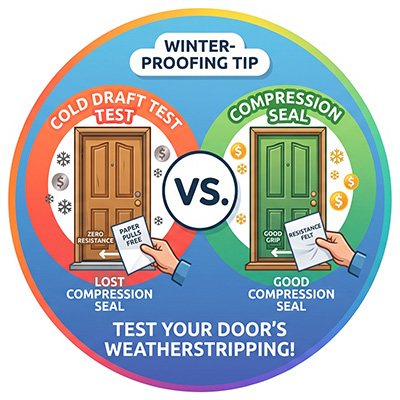
If you suspect an exterior door is letting in cold air but can’t visually spot any damage, try the simple paper test.
Close the door firmly on a standard piece of paper; if you can easily pull the paper out with absolutely zero resistance, your weatherstripping has completely lost its compression seal, meaning that spot is a direct pipeline for freezing winter drafts.
Patio Doors - Clearing the Hidden Weep Holes

Most sliding patio doors feature tiny drainage holes, called weep holes, along the exterior bottom of the frame to channel away rainwater.
These holes frequently get clogged with outdoor dirt, leaves, or dead insects; if left blocked, trapped water will back up into the interior track and slowly rot out your sub-floor or ruin your drywall, so make it a habit to clear them annually with a thin piece of wire or a blast of compressed air.
Patio Doors - The WD-40 Warning for Patio Tracks
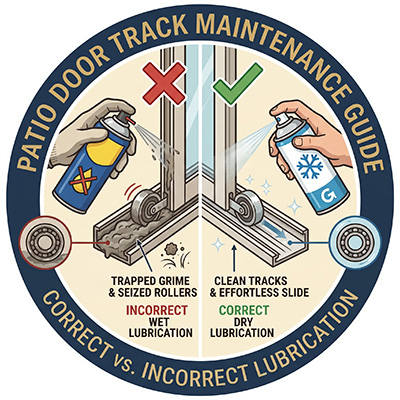
Never use standard WD-40 or heavy grease to lubricate your sliding patio door tracks and rollers.
Because these are "wet" lubricants, they act like magnets for dirt, dust, and pet hair, creating a thick, grinding sludge that will eventually seize up and ruin the rollers.
Instead, thoroughly clean the track and apply a clean, dry, silicone-based spray lubricant to keep the door sliding effortlessly.
Installation Day - Clear the Danger Zones
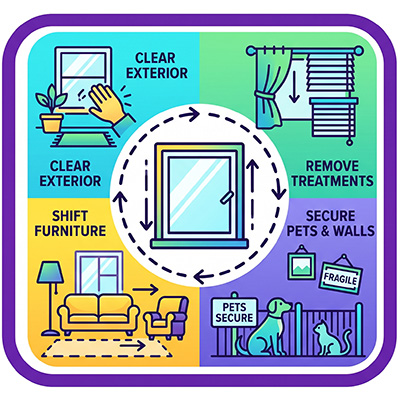
To ensure a smooth, damage-free installation day, proactively clear a wide perimeter around both the interior and exterior of the windows being replaced.
Remove all blinds, curtains, and shelters; shift nearby furniture toward the centre of the room; take down fragile wall decorations; and make secure arrangements to keep your pets safely away from the work areas while crews are moving heavy glass.
Checking the Integrity of the Vapour Barrier
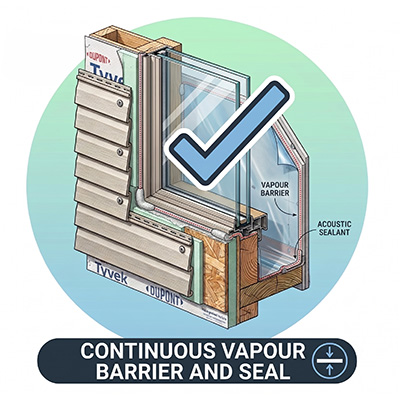
The sealing hidden behind your interior drywall is just as important as the caulking on your exterior siding.
For a truly airtight installation, your installers must meticulously tie the window's built-in sealing tape directly back into your home’s existing interior poly vapour barrier. Skipping this technical integration step allows warm, moist room air to migrate into the wall cavity, where it condenses against the cold exterior studs and creates a hidden breeding ground for rot and structural mould.
Choose the Right Window Foam
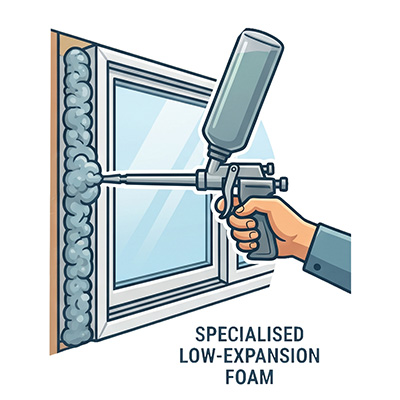
During installation, ensure your contractor exclusively uses specialised low-expansion polyurethane foam to insulate the rough opening gap around your window frame.
Standard high-expansion gap foams are designed for rough construction and exert immense pressure as they cure, which can easily bow your window's vinyl frame, warp the tracks, and completely jam your sashes so the window can never open smoothly.
Lock Down the Hardware Details
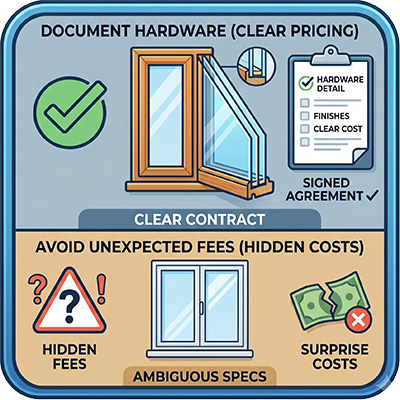
When reviewing a window contract, make sure no detail is treated as too small to put in writing.
Ensure the final quote explicitly documents your specific hardware choices, such as self-locking mechanisms, nested folding handles, specialised patio door locks, and custom colour finishes, so there are no surprises or hidden upgrade fees on installation day.
Check the Warranty for Hidden Labour Costs

While many window and door companies advertise a "lifetime warranty," you need to look at the fine print before buying.
Ask specifically whether the warranty covers both the cost of replacement materials and the specialised labour required to fix them, as many standard manufacturer warranties only cover parts, leaving you to pay out of pocket for the contractor's time down the road.
Are Installers Payed by the Job vs. by the Hour?
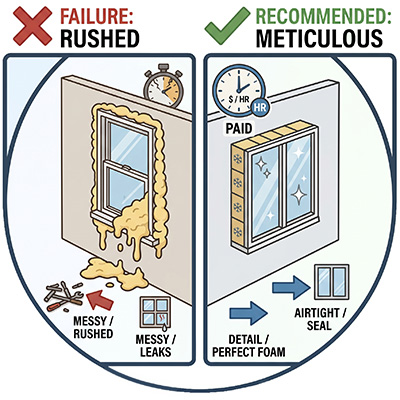
Before signing a contract, find out exactly who is going to be performing the physical installation.
Many window/door retailers subcontract their labour to third-party crews who are paid "by the job" an incentive to rush.
Instead, look for local businesses that use factory-trained, in-house, or contract installers paid by the hour, ensuring they take the time to insulate and seal every single edge meticulously.
Low-E Glass Configurations for Plant Lovers

While Low-Emissivity (Low-E) glass coatings are fantastic for blocking harmful UV rays and preventing your furniture or hardwood flooring from fading, they can sometimes restrict the specific light spectrum that indoor plants need to thrive.
Work closely with your window provider to customise your Low-E configurations across different sides of the house, balancing solar heat protection on the west with the light transmission your indoor garden needs on the south or east.
Varying Pane Thickness for Noise Reduction
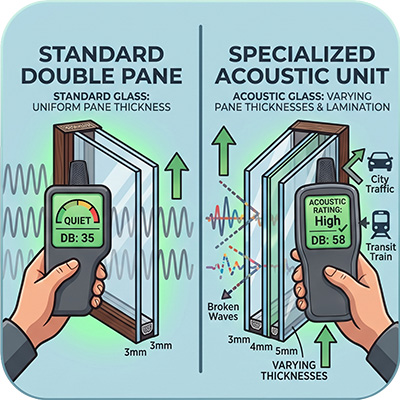
If you live near a busy Ottawa roadway, a transit line, or a noisy neighbourhood, look into specialised acoustic glass configurations rather than standard double-pane packages.
Requesting a multi-pane unit that uses varying glass thicknesses (such as combining a 3mm pane with a 4mm pane) breaks up sound waves much more effectively than uniform glass, resulting in a noticeably quieter, more peaceful indoor environment.
Privacy vs. Light Balance

Walk through your home and evaluate street-facing windows, bathrooms, or entryways for glare and privacy concerns.
You can utilise standard privacy glass options, like frosted or patterned textures, to completely block the view from the outside world without forcing yourself to live in the dark or constantly pull heavy blinds down.
Security - Strategic Glass for Vulnerable Zones

For ground-floor entry points or windows near dark, shielded areas of your property, upgrade to security glass rather than standard panes.
Laminated glass is ideal because it stays completely intact even when shattered, drastically delaying forced entry, while tempered glass breaks safely into blunt, non-hazardous pieces to prevent severe injury.
Security - Anchoring Against Intruders
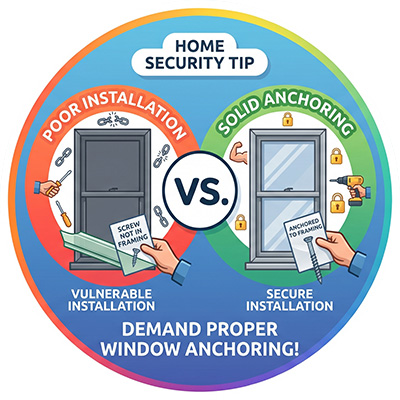
When selecting new windows, ensure you look for models that utilise long structural screws and verify that they are securely anchored directly into the home’s wood framing, not just the exterior siding or trim.
It’s one of the simplest, hidden, yet most effective ways to prevent a forced-entry break-in and ensure the overall structural integrity of the window.
Navigating the Ontario Heritage Act in Ottawa

If your home is located in an older, historic Ottawa neighbourhood like Rockcliffe Park, The Glebe, Sandy Hill, or Centretown, always check whether it is a designated heritage property before altering your windows.
Under the Ontario Heritage Act, the city strictly enforces historical structural rules, meaning you may need explicit municipal approval or specialised simulated architectural elements to match the exact look of the original facades.
Awning Windows for Hard-to-Reach Spots

For hard-to-reach spaces like above a kitchen sink, inside a laundry room, or high on a basement wall, choose crank-operated awning windows.
Because they are hinged at the top and open outward from the bottom, they are incredibly easy to operate from an angle and can even be left open for ventilation during a light rain shower without letting water inside.
Thinking Holistically About Room Dynamics
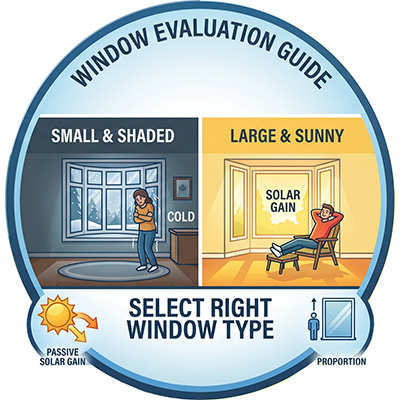
When evaluating window types, think holistically about how each one interacts with your home's unique layout, architecture, and daily room usage.
For instance, while stunning bay and bow windows add physical dimension and incredible passive solar warmth, they can quickly overwhelm smaller rooms or remain dark and chilly if placed in heavily shaded exposures.
Mind the Swing
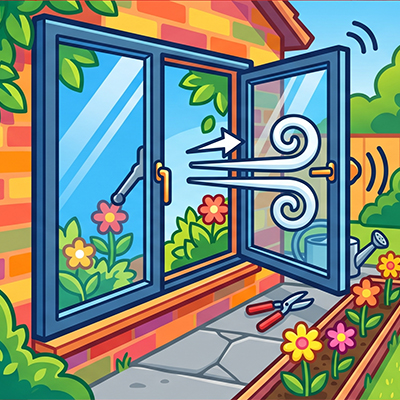
When replacing windows, think beyond looks and consider how the window operates in your physical space.
For example, casement windows swing outward, which means they can accidentally block tight decks, walkways, or flowerbeds; additionally, in exceptionally windy areas, those open crank-out sashes can catch the wind and rattle, which might disrupt sleep if installed in bedrooms.
Modernizing Your Curb Appeal
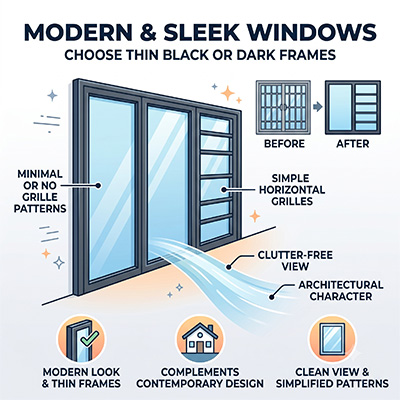
To give your home a sleek, modern look, choose thin black or dark-coloured window frames with minimal or no grille patterns.
If you want to add architectural character without cluttering your view, opt for simple horizontal grilles that complement contemporary design styles while keeping the centre of the glass clean.
Mix and Match Your Window Glazing
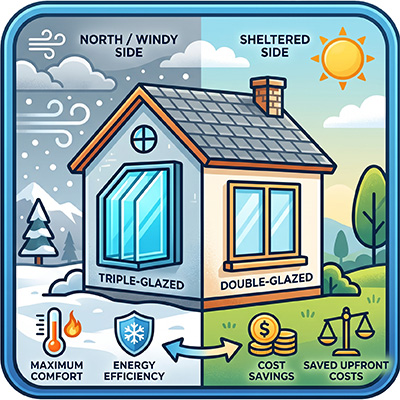
You don't have to put triple-glazed windows on every square inch of your house to see a massive difference in comfort.
Consider placing high-efficiency, multi-glazed triple-pane windows on the north-facing or exceptionally windy sides of your home to fight off severe winter drafts, while sticking to standard double-glazing on sheltered sides to save on overall upfront costs.
Decoding the Energy Rating (ER) Number

If you want a quick, comprehensive snapshot of how a window will perform, look at its overall Energy Rating (ER) number.
Unlike individual metrics, the ER score is a balanced mathematical formula that combines the window's heat loss protection, passive solar warmth retention, and air-tightness into one single number, and the higher this number is, the more energy-efficient the window will be.
The Right Metric for Cold Climates

When comparing energy-efficient windows in cold regions like Ottawa, focus heavily on a low U-Factor and a high ER (Energy Rating) rather than the SHGC (Solar Heat Gain Coefficient).
The lower the U-Factor, the better the window is at stopping heat from escaping your home in mid-January, whereas a heavy focus on SHGC is a metric primarily meant for hot, sunny southern climates looking to block out constant summer heat.
The Real Meaning of Canada’s ENERGY STAR® Certification

When browsing for replacements, always verify that your selected windows or doors carry the official ENERGY STAR® certification for Canada.
This label isn't just a generic marketing sticker; it proves the window or door has been third-party tested and verified to meet rigorous, legally enforced climate performance standards specifically mapped out to handle harsh Canadian winters.
Do Not Force a Poor Fit
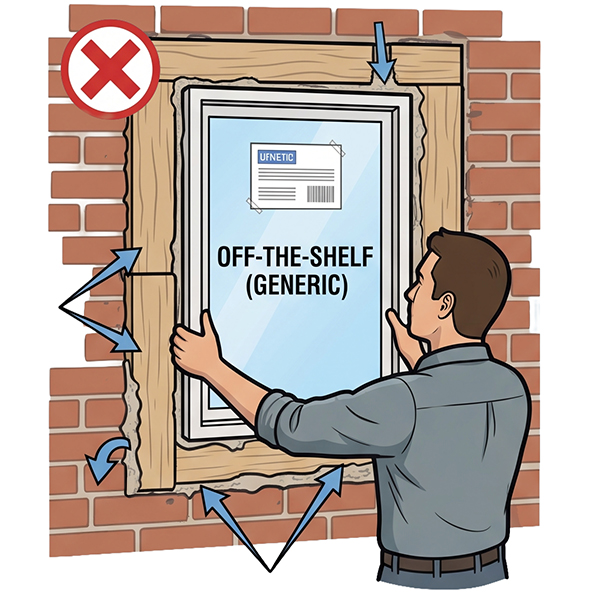
Never allow a contractor to use "off-the-shelf" standard-sized retail windows on your home if it requires them to modify your wall opening.
Forcing standard windows into unique spaces usually involves adding uninsulated filler panels or messy adaptive engineering that creates structural vulnerabilities; instead, insist on custom-manufactured windows built to your home's exact millimetre specifications to guarantee an airtight fit.
Apples-to-Apples Specification Check

When collecting quotes from different window and door companies, never shop based on price alone, as low-cost quotes usually indicate stripped-down materials or substandard efficiency ratings.
Always explicitly request the full window manufacturer spec sheets so you can make an accurate, apples-to-apples comparison of the actual glass type, vinyl quality, hardware durability, and thermal ratings.
Beware the BASE PRICE Trap
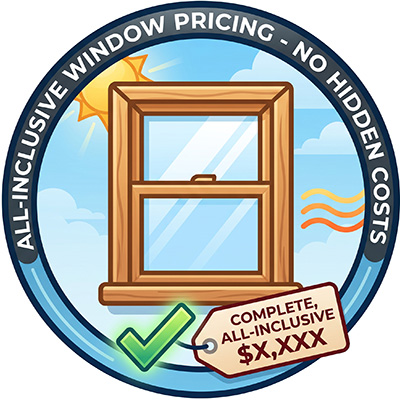
When shopping for windows, don't over-commit to the cheapest quote you receive.
Some suppliers will show you an incredibly attractive, rock-bottom base price just to get their foot in the door, then drastically hike the price up once you select your actual frame styles, custom colours, glass upgrades, or interior trim options.
Always insist on seeing a complete, all-inclusive price before making a decision.
Mix and Match Window Materials, or Colours to Get the Best Deal

You don't have to use the exact same premium window line on every single side of your house.
Consider mixing window materials and brands to maximise your budget: invest in premium finishes or classic wood-clad frames on the front of your home to boost street-level curb appeal, while using durable, cost-effective, low-maintenance vinyl on the sides and back where they aren't as visible.
Diagnosing a Sticking Door: Adjustment vs. Replacement
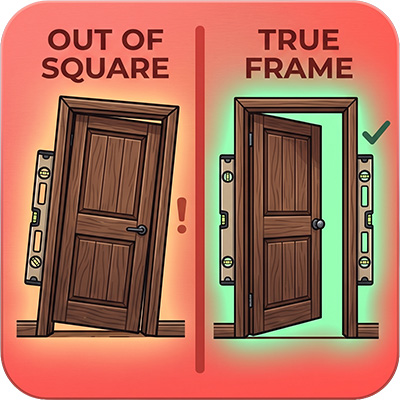
A door that catches or binds is often a symptom of frame movement rather than a ruined door.
Use a level to check if the frame is plumb and square. While minor shifting can usually be fixed by adjusting the hinges or resetting the jamb, severe structural settling or poor original installation may require a full-frame replacement to restore proper operation.
The Level, Plumb, and Square Window Check
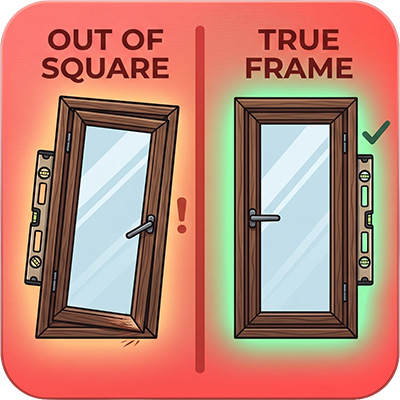
If a window is difficult to crank open or catches along the track, the unit itself might not be damaged, the frame may have simply settled out of square.
Before paying for an expensive replacement, check the jambs with a level. Often, sticking can be resolved with simple hardware adjustments, lubricating the tracks, or resetting shims without tearing out the entire unit.
Retrofit vs. Full-Frame Window Replacement
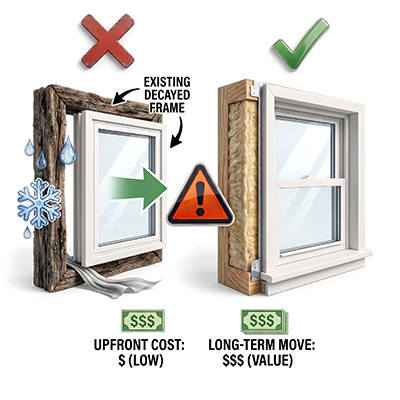
When choosing an installation method, remember that retrofit (pocket) installations cost less upfront because the new window is slipped directly into your existing wood frame.
However, if your home's original frame is warped, leaking, or poorly insulated, a pocket replacement will trap those issues inside; in those cases, investing in a full-frame replacement is always the smarter long-term move to secure proper insulation down to the studs.
The Screwdriver Wood Rot Test
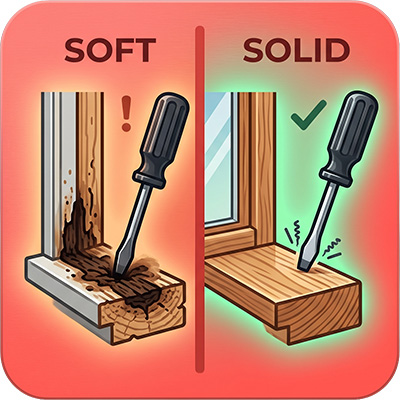
Gently press a flat-head screwdriver into your wooden windowsill or exterior frame. If it sinks into the wood like soft butter, you are dealing with deep, structural wood rot and it is time for a full replacement.
However, if the wood strongly resists the pressure, that old-growth timber is still incredibly dense and solid, making it a great candidate for restoration or a simpler retrofit.